
1. Introduction
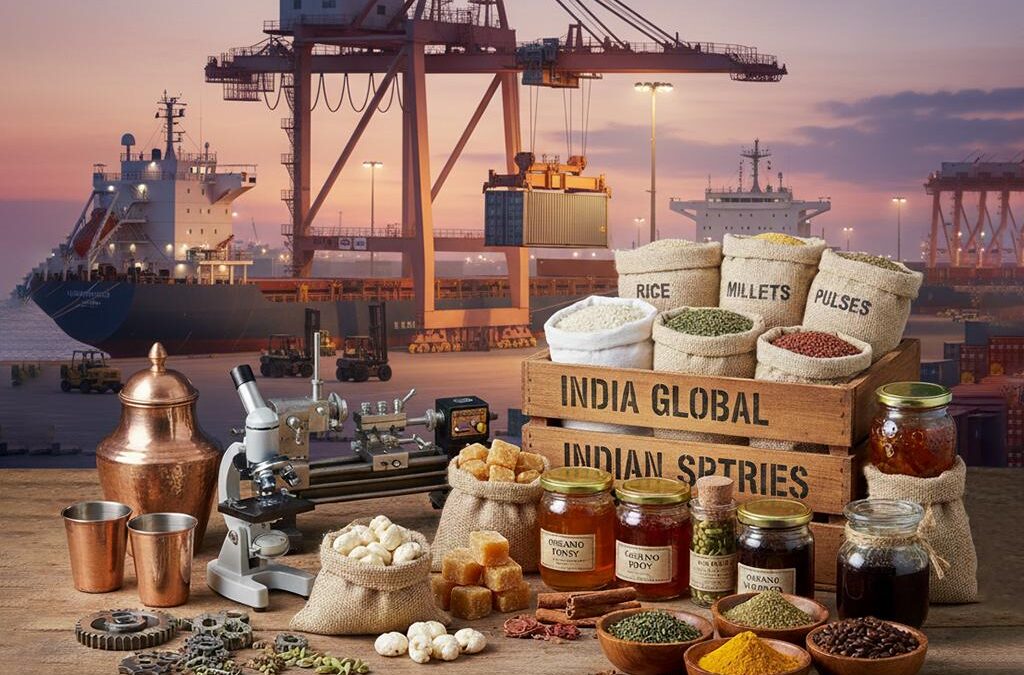
International trade is an important part of the modern economy. Countries do not produce all the goods and services that their people need. Some countries have abundant natural resources, while others have advanced technology, skilled workers, or favourable climatic conditions. Therefore, countries buy and sell goods and services from one another. This international exchange is mainly divided into exports and imports.
Export refers to the sale of goods and services from one country to another country. Import refers to the purchase of goods and services from another country. Together, exports and imports form an important part of a country’s foreign trade.
2. Meaning of Export
An export occurs when goods or services produced in one country are sold to customers in another country.
For example, when an Indian company sells textiles, medicines, rice, tea, or software services to a company in another country, those products or services are considered Indian exports.
Exports can include both goods and services.
Examples of exports from India
- Agricultural products such as rice, spices, tea, coffee, and fruits
- Textiles and garments
- Pharmaceuticals and medicines
- Engineering goods and machinery
- Petroleum products
- Gems and jewellery
- Information technology and software services
- Automobile components
3. Meaning of Import
An import occurs when goods or services are purchased from another country for use or sale in the domestic country.
For example, when an Indian company purchases crude oil, machinery, electronic components, or certain raw materials from another country, these products are considered imports into India.
Examples of imports into India
- Crude oil and petroleum products
- Gold and precious metals
- Electronic components
- Machinery and industrial equipment
- Chemicals
- Certain raw materials
- Medical and scientific equipment
- Aircraft and specialised technology
4. Difference Between Export and Import
| Basis | Export | Import |
|---|---|---|
| Meaning | Selling goods or services to another country | Buying goods or services from another country |
| Direction | Goods move out of the country | Goods move into the country |
| Purpose | To sell products in foreign markets | To obtain products or resources from foreign markets |
| Foreign exchange | Generally earns foreign exchange | Generally involves payment in foreign exchange |
| Example | India selling rice to another country | India buying crude oil from another country |
5. Importance of Exports
Exports are important for the economic development of a country.
a. Earning Foreign Exchange
Exports help a country earn foreign currency. This foreign exchange can be used to pay for necessary imports, repay international obligations, and support economic activities.
b. Creating Employment
Export-oriented industries require workers to manufacture, package, transport, market, and sell products. Therefore, exports can create employment opportunities in manufacturing, agriculture, services, logistics, and other sectors.
c. Expanding Markets
A business that sells only in its domestic market has a limited number of customers. By entering international markets, the business can reach customers in many different countries and increase its sales.
d. Encouraging Production
Strong demand from foreign countries can encourage domestic companies to increase production. This can lead to greater investment in factories, machinery, technology, and infrastructure.
e. Improving Quality
International markets are often highly competitive. Exporting companies need to maintain good quality and meet international standards. This can encourage businesses to improve their products and production methods.
6. Importance of Imports
Imports are also important because no country can produce everything it needs efficiently.
a. Availability of Raw Materials
Industries may require raw materials that are not available in sufficient quantities within the country. Imports allow businesses to obtain these materials from international markets.
b. Access to Technology
Countries can import advanced machinery, equipment, software, and technology. These imports can help domestic industries improve productivity and efficiency.
c. Meeting Consumer Demand
Imports provide consumers with products that may not be produced domestically or may be available only in limited quantities.
d. Supporting Industries
Many industries depend on imported components and raw materials. For example, manufacturers may import specialised parts and use them to produce finished goods domestically.
e. Greater Variety
International trade gives consumers access to a wider variety of products from different countries.


7. Export and Import Procedure
Export and import transactions normally involve several stages.
Export Procedure
- The exporter identifies a foreign buyer.
- The buyer and seller discuss the product, quantity, quality, and price.
- An order or agreement is made.
- The exporter prepares the goods.
- The goods are packed and labelled according to requirements.
- Necessary export documents are prepared.
- The goods are transported to the port, airport, or other shipping location.
- Customs procedures are completed.
- The goods are shipped to the foreign buyer.
- Payment is received according to the agreed terms.
Import Procedure
- The importer identifies a foreign supplier.
- The importer selects the required goods.
- The price and terms of purchase are agreed upon.
- The importer places an order.
- The supplier prepares and ships the goods.
- Shipping and commercial documents are prepared.
- The goods arrive at the importing country’s port or airport.
- Customs procedures and applicable duties are completed.
- The goods are released to the importer.
- Payment is made according to the agreed terms.